
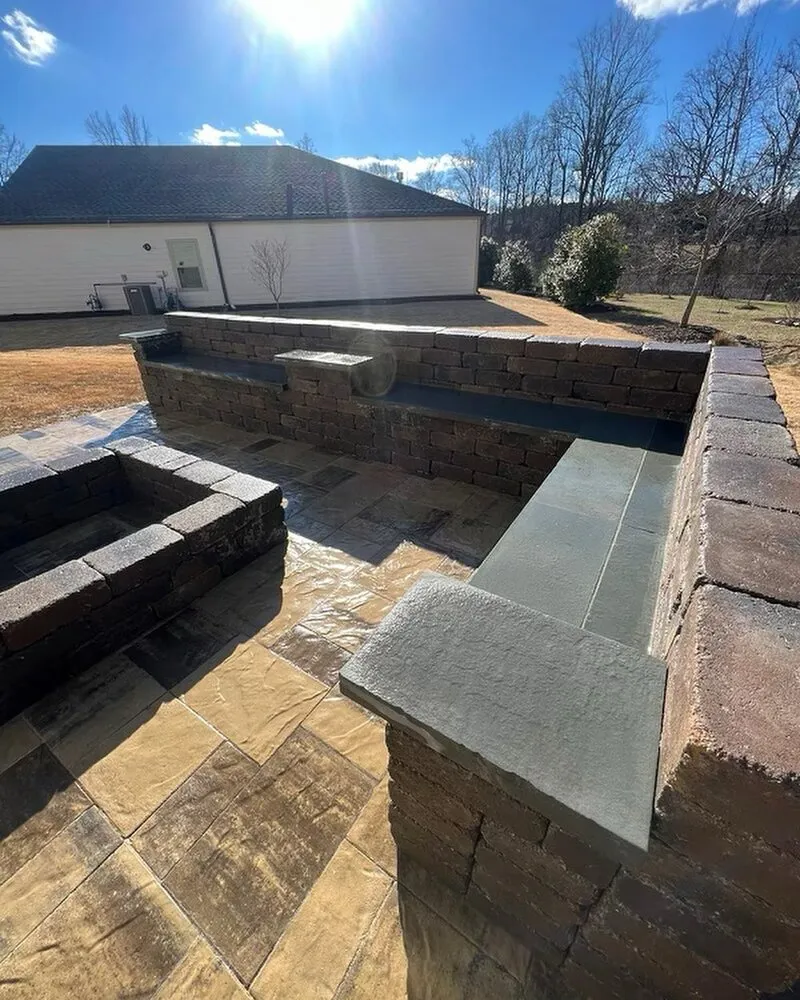
Stamped concrete and interlocking pavers are the two most popular choices for patios, pool decks, and walkways in the Atlanta area. Both look great when freshly installed. But the decision between them should be based on how they perform over 10, 15, and 25 years in North Georgia’s specific conditions, not just how they look on day one.
As a company that has been installing hardscapes across Alpharetta, Roswell, Johns Creek, and the surrounding areas since 2004, we have seen what happens to both materials over time. Here is an honest comparison to help you make the right call.
Cost Comparison
Let us start with what most people want to know first:
| Factor | Stamped Concrete | Interlocking Pavers |
|---|---|---|
| Installed cost per sq ft | $12 - $20 | $12 - $25 (concrete pavers) |
| Sealing (required) | Every 2-3 years, $0.50-$1.50/sq ft | Optional, every 3-5 years |
| Repairs | Full slab replacement, $8-$20/sq ft | Individual paver replacement, $3-$8/sq ft |
| Lifespan | 10-15 years before major issues | 25-30+ years |
| Lifetime cost (20 years, 400 sq ft) | $8,000 - $18,000+ | $6,000 - $12,000 |
The upfront cost is similar for basic options. Where the numbers diverge significantly is over time. Stamped concrete requires more frequent sealing to maintain its appearance, and when cracks develop, the repair options are limited and expensive.
Durability in Atlanta’s Climate
The Freeze-Thaw Problem
Atlanta typically experiences 30 to 50 freeze-thaw cycles per winter. That might not sound like much compared to northern states, but it is enough to cause real damage to rigid surfaces. When water seeps into hairline cracks in stamped concrete and freezes, it expands and widens those cracks. Each cycle makes the damage worse. Over several winters, what started as a cosmetic crack becomes a structural problem.
Pavers handle freeze-thaw cycles fundamentally differently. The joints between pavers allow the entire surface to flex as the ground beneath moves. Instead of cracking, the system absorbs the movement. This is the same principle that makes brick roads outlast poured concrete roads.
Georgia Red Clay
Our clay soil expands when wet and contracts when dry, creating ground movement that rigid slabs cannot accommodate. Stamped concrete is especially vulnerable because it is one continuous pour. A paver system, by contrast, is made up of hundreds of individual units that can shift slightly and resettle without visible damage.
We have more detail on how pavers compare to standard poured concrete in our pavers vs. concrete comparison.
Repairability: Where Pavers Win Decisively
This is the single biggest practical advantage pavers have over stamped concrete, and it is the one that most homeowners do not think about until they need it.
With Pavers
Need to run a gas line to a new grill? A plumber needs to access a pipe? A section settled after a heavy rain? You lift out the affected pavers, do the work or re-level the base, and set the pavers back in place. The repair is virtually invisible. Cost: a few hundred dollars for a service call, or free if you do it yourself.
With Stamped Concrete
The same scenarios require saw-cutting the slab, demolishing the section, and pouring a new patch. The new pour will never match the original in color or texture because concrete changes color as it ages and stamps are difficult to align perfectly with existing patterns. Most stamped concrete repairs look like patches. Cost: $1,000 to $5,000+ depending on the area, and the result is almost always visible.
This matters more than most people realize. Over 20 years of owning a home, there is a high probability that you will need to access something under or near your patio.
Appearance and Design Options
Stamped Concrete
Stamped concrete can mimic the look of stone, brick, or slate using molds pressed into wet concrete. When freshly sealed, it looks sharp. The challenge is maintaining that appearance. The color fades without regular resealing, and the surface can become slippery when wet, especially after a fresh coat of sealer. The stamped texture also wears down over time in high-traffic areas, which creates an uneven, worn look that is difficult to restore.
Pavers
Pavers offer genuine texture and color that goes all the way through the material, not just on the surface. You can mix colors, create borders, and design custom patterns. The color does not fade because it is integral to the paver itself. Higher-end options like tumbled pavers or natural stone give you aesthetics that stamped concrete can only approximate.
For design inspiration, take a look at our project portfolio to see the range of what is possible with pavers.
Maintenance Requirements
Stamped Concrete Maintenance
- Resealing every 2-3 years (mandatory to maintain appearance and prevent damage)
- Power washing annually
- Crack monitoring and repair as needed
- Color touch-ups for worn areas
- Deicing salt should be avoided for the first year, and even after that, some products can cause surface scaling
Paver Maintenance
- Occasional sweeping and rinsing
- Polymeric sand reapplication every 5-8 years
- Sealing is optional (enhances color but is not required for durability)
- Weed management in joints (minimal with quality polymeric sand)
- Individual paver replacement if damage occurs
Both surfaces require some upkeep, but pavers are more forgiving if you miss a maintenance cycle. A stamped concrete patio that goes unsealed for a few years will show it. A paver patio that goes unsealed for a few years will look essentially the same.
When Stamped Concrete Might Make Sense
To be fair, there are situations where stamped concrete can be a reasonable choice:
- Very tight budgets where even basic pavers are out of reach
- Temporary installations where you do not need 25-year performance
- Highly geometric, ultra-smooth surfaces that pavers cannot replicate
- Interior applications or covered areas where freeze-thaw is not a factor
For most exterior residential applications in the Atlanta area, though, pavers are the stronger long-term investment.
The Bottom Line
Stamped concrete and pavers may look comparable when freshly installed, but they diverge significantly over time. In Atlanta’s climate, with our clay soils and freeze-thaw cycles, pavers offer better durability, easier maintenance, lower lifetime cost, and far superior repairability. The interlocking paver system was designed for exactly the kind of ground conditions we have in North Georgia.
If you are weighing these options for your patio, driveway, or pool deck, we are happy to walk you through the specifics for your property. As ICPI Certified and Belgard Master Craftsman installers with over 460 completed projects across North Atlanta, we can show you exactly what to expect from a paver installation that is built to last.
Get a free estimate or call (678) 524-5531 to talk through your project.