
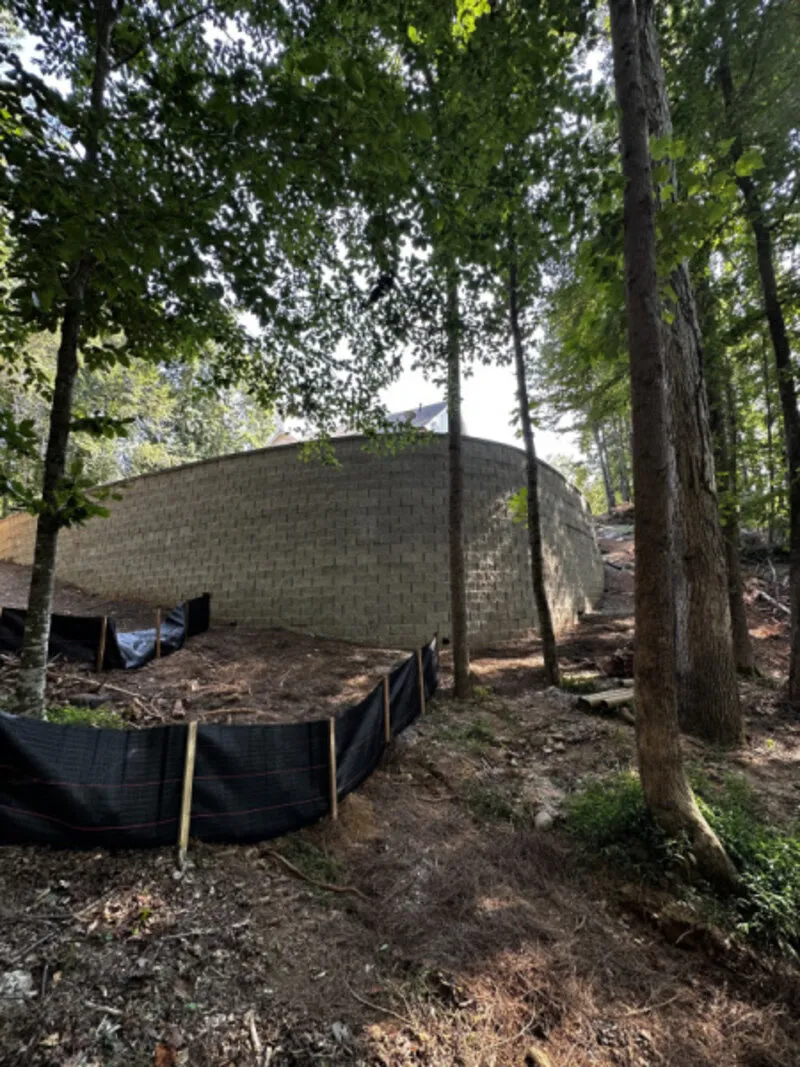
Retaining walls are one of the most common hardscape projects in the Atlanta metro area, and for good reason. North Georgia’s rolling terrain means a lot of residential properties sit on slopes that need structural support for usable yard space, erosion control, or driveway grading. But retaining walls are also one of the most misunderstood projects when it comes to cost, because the price difference between a 2-foot decorative wall and a 6-foot structural wall is enormous.
This guide covers real 2026 pricing for retaining walls in the Atlanta area, including material options, permit requirements by county, and the engineering considerations that affect your budget.
Retaining Wall Cost Per Square Foot in Atlanta
Retaining wall pricing is typically quoted per square face foot (the visible surface area of the wall). Here is what to expect in 2026 for professional installation in metro Atlanta:
| Material | Cost Per Square Face Foot | Notes |
|---|---|---|
| Segmental concrete block (e.g., Belgard, Pavestone) | $20 - $40 | Most common residential choice |
| Natural stone (fieldstone, Tennessee ledge, granite) | $25 - $50 | Premium look, more labor-intensive |
| Poured concrete (with veneer) | $30 - $55 | Engineered walls over 6 feet |
| Boulder walls | $20 - $35 | Informal, naturalistic applications |
For a standard segmental block wall that is 3 feet tall and 30 feet long (90 square face feet), expect to pay $1,800 to $3,600 installed. A taller 5-foot wall running 50 linear feet (250 square face feet) in natural stone can range from $6,250 to $12,500 or more, especially once engineering and drainage are factored in.
What Drives Retaining Wall Costs Up
Wall Height
Height is the single biggest cost driver. A 2-foot garden wall is a relatively simple project. Once you get above 4 feet, the structural requirements increase significantly. Walls over 4 feet in most Georgia jurisdictions require engineered drawings, deeper foundations, geogrid reinforcement layers, and more robust drainage systems. The cost per square foot climbs sharply because of these added requirements.
As a rough guide:
- Under 3 feet: Standard base and block construction
- 3 to 4 feet: Enhanced drainage, deeper footing, may need geogrid
- Over 4 feet: Engineering required, geogrid layers every 2 courses, deeper excavation
Drainage
Every retaining wall in the Atlanta area needs drainage. This is non-negotiable with our clay soils. At a minimum, a proper installation includes a perforated drain pipe at the base of the wall, wrapped in filter fabric, bedded in gravel, and daylit to an appropriate discharge point. For taller walls or areas with significant water flow, you may need additional drainage provisions behind the wall.
Drainage typically adds $8-$15 per linear foot to the project cost. Skipping it is the number one reason retaining walls fail in Georgia. Water builds up behind the wall, saturates the clay, and the hydrostatic pressure pushes the wall out. We see this on failed DIY and poorly built walls regularly.
Site Access and Excavation
Retaining walls often sit on slopes that are difficult to reach with equipment. If your wall is on a steep hillside behind the house, material delivery and excavation become labor-intensive. Rocky soil conditions, which are common in parts of Roswell, Milton, and northern Fulton County, can also increase excavation costs when jackhammering is required.
Permit Requirements by County
Retaining wall permit requirements vary across the metro Atlanta area. Here is what you need to know for the most common counties we work in:
Fulton County and City of Atlanta
Walls over 4 feet in height (measured from the bottom of the footing to the top of the wall) require a building permit and stamped engineering drawings. The city of Atlanta may also require a land disturbance permit if excavation affects more than 500 square feet of soil.
Forsyth County
Forsyth County requires a permit for retaining walls over 4 feet. They are particularly strict about drainage plans and erosion control during construction, which makes sense given how much new development is happening in the area.
Cherokee County
Similar 4-foot rule applies. Cherokee also requires a site plan showing the wall location relative to property lines and easements. Setback requirements can affect where you are allowed to build.
City of Alpharetta, Roswell, and Johns Creek
These cities follow Fulton County’s building code but have their own permitting offices. Processing times vary. Plan for 2-4 weeks for permit approval on engineered walls.
A reputable contractor will handle the permitting process for you. If a contractor suggests skipping the permit on a wall that requires one, that is a serious red flag.
Engineering Requirements for Taller Walls
Once your wall exceeds 4 feet, you will need a licensed geotechnical or structural engineer to design it. Engineering fees typically run $1,500 to $3,500 depending on the complexity of the wall and whether soil testing is needed. This cost is separate from the construction bid but is required before you can pull a permit.
The engineer will specify:
- Foundation depth and width
- Geogrid lengths and spacing
- Backfill material requirements
- Drainage provisions
- Soil bearing capacity requirements
These specifications directly impact construction costs. A wall that requires 8-foot geogrid tails costs more than one that requires 4-foot tails because of the additional excavation behind the wall.
Segmental Block vs. Natural Stone Walls
Segmental block walls (like Belgard’s Celtik Wall or Belair Wall systems) are the most popular choice for residential retaining walls in Atlanta. They are engineered systems with published design specifications, which makes permitting straightforward. They install efficiently because the blocks are uniform, and they come in a range of colors and textures that complement most home styles.
Natural stone walls cost more primarily because of labor. Each stone is a different size and shape, so the mason has to select and fit each piece individually. The result is a distinctive, high-end look that works particularly well on properties with a natural or wooded aesthetic. Natural stone walls are common in upscale communities like Chastain Park, Buckhead, and parts of Milton where the investment aligns with overall property values.
Multi-Tier Walls vs. Single Tall Walls
If you need to address a significant grade change (6 feet or more), you have two options: one tall wall or multiple shorter terraced walls. Terraced walls are often the better choice for several reasons:
- Each wall can stay under 4 feet, potentially avoiding engineering requirements
- The terraces create planting areas that soften the visual impact
- Water pressure is distributed across multiple structures rather than concentrated on one
- Total cost is sometimes comparable because you avoid engineering fees
The tradeoff is that terraced walls require more horizontal space. If your lot is narrow, a single engineered wall may be the only practical option.
Getting Your Retaining Wall Project Started
Retaining walls are structural projects that require experience, proper drainage, and in many cases professional engineering. They are not a good candidate for the lowest bid. A wall that fails can damage your property, your neighbor’s property, and cost more to rebuild than it would have cost to build correctly the first time.
We have been building retaining walls across North Atlanta since 2004, earning a BBB A+ rating since 2019 and certifications from both ICPI and Techo-Pro. Our team handles everything from initial design through permitting and construction, and we back every project with a 3-year workmanship warranty.
Browse examples of our retaining wall work in the project portfolio or request a free estimate to discuss your project. You can also call us directly at (678) 524-5531.